Canopy structure
Topics
Concepts and definitions
Measures of canopy structure
Digital canopy photography
Training applications
Units
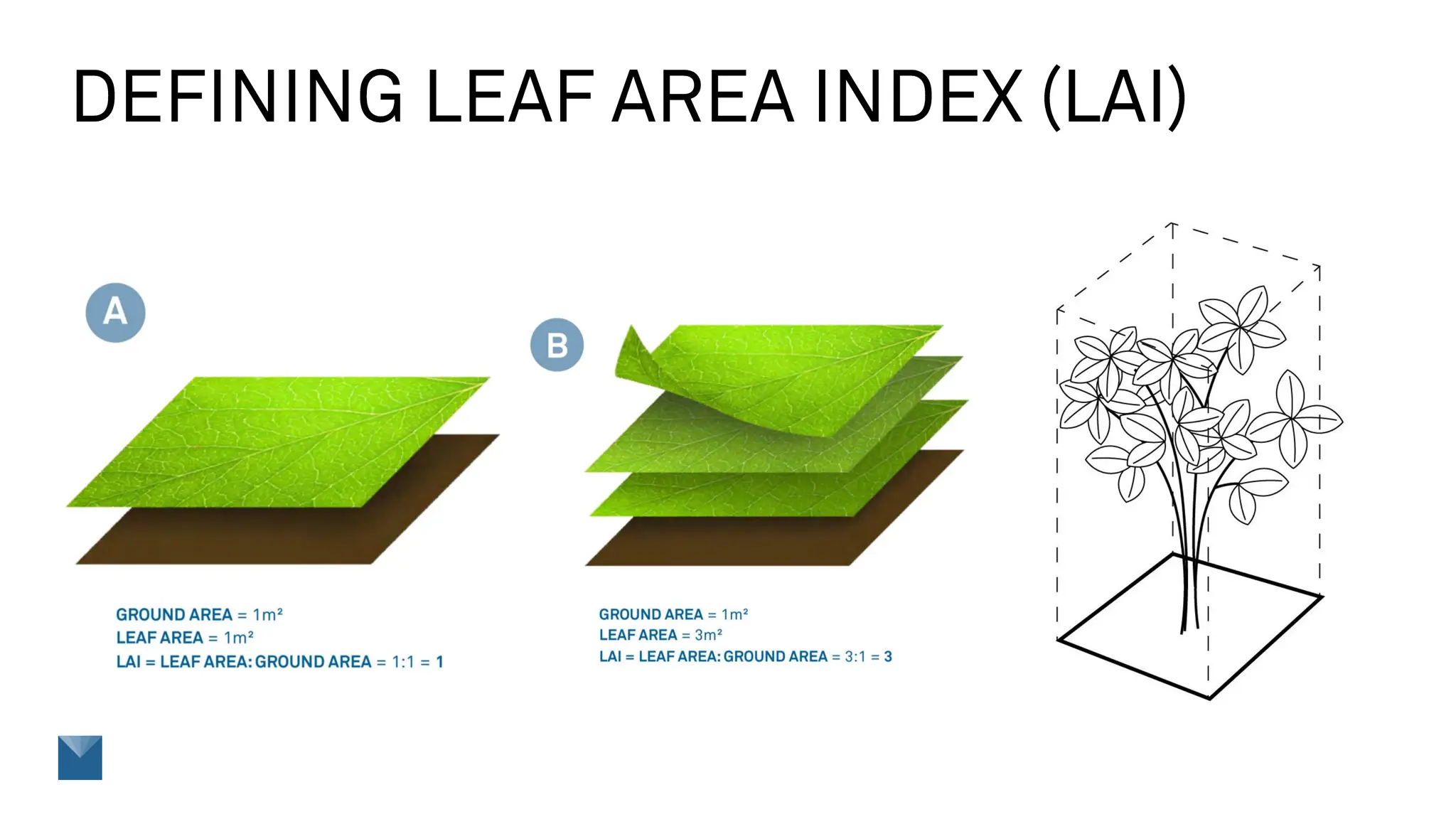
- LAI is “half the total area of green elements of the canopy per unit horizontal ground area” (Chen and Black 1992)
LAI
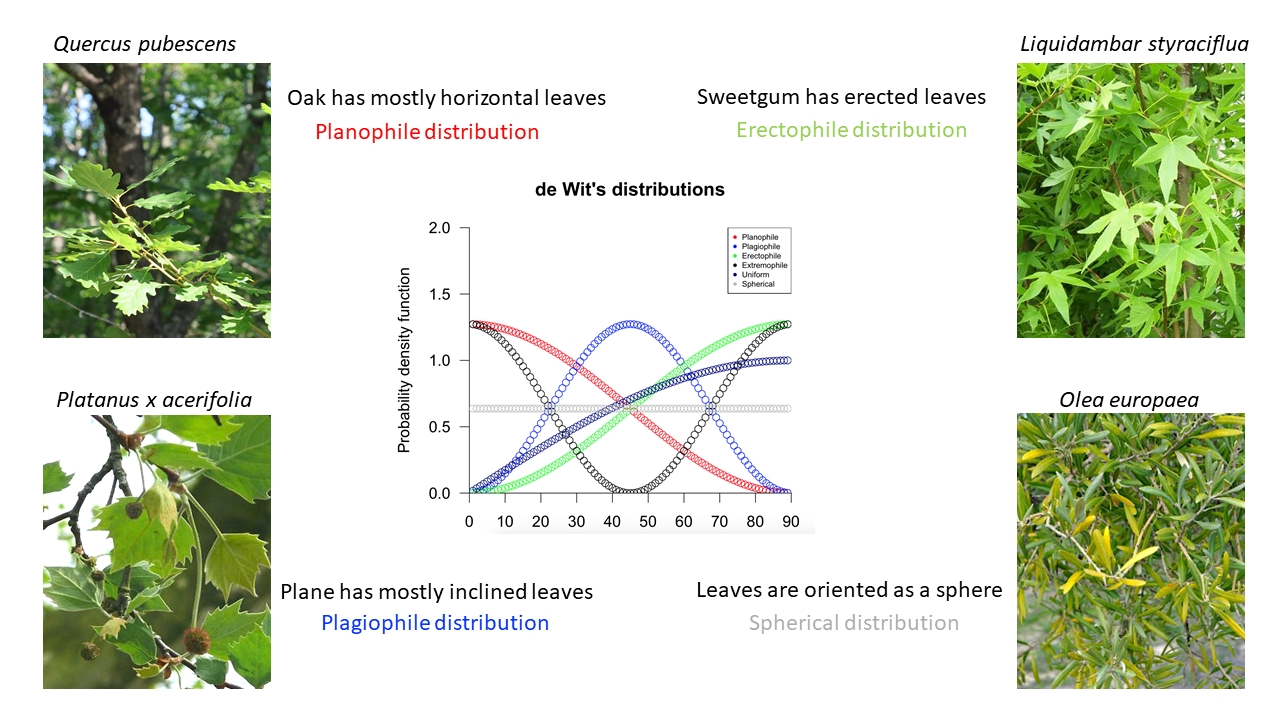
LAI is basically influenced by:
- Leaf traits: shape, SLA, habit (evergreen/deciduous)
- Leaf orientation: random, clumped
- Leaf inclination angle distribution
Other canopy attributes
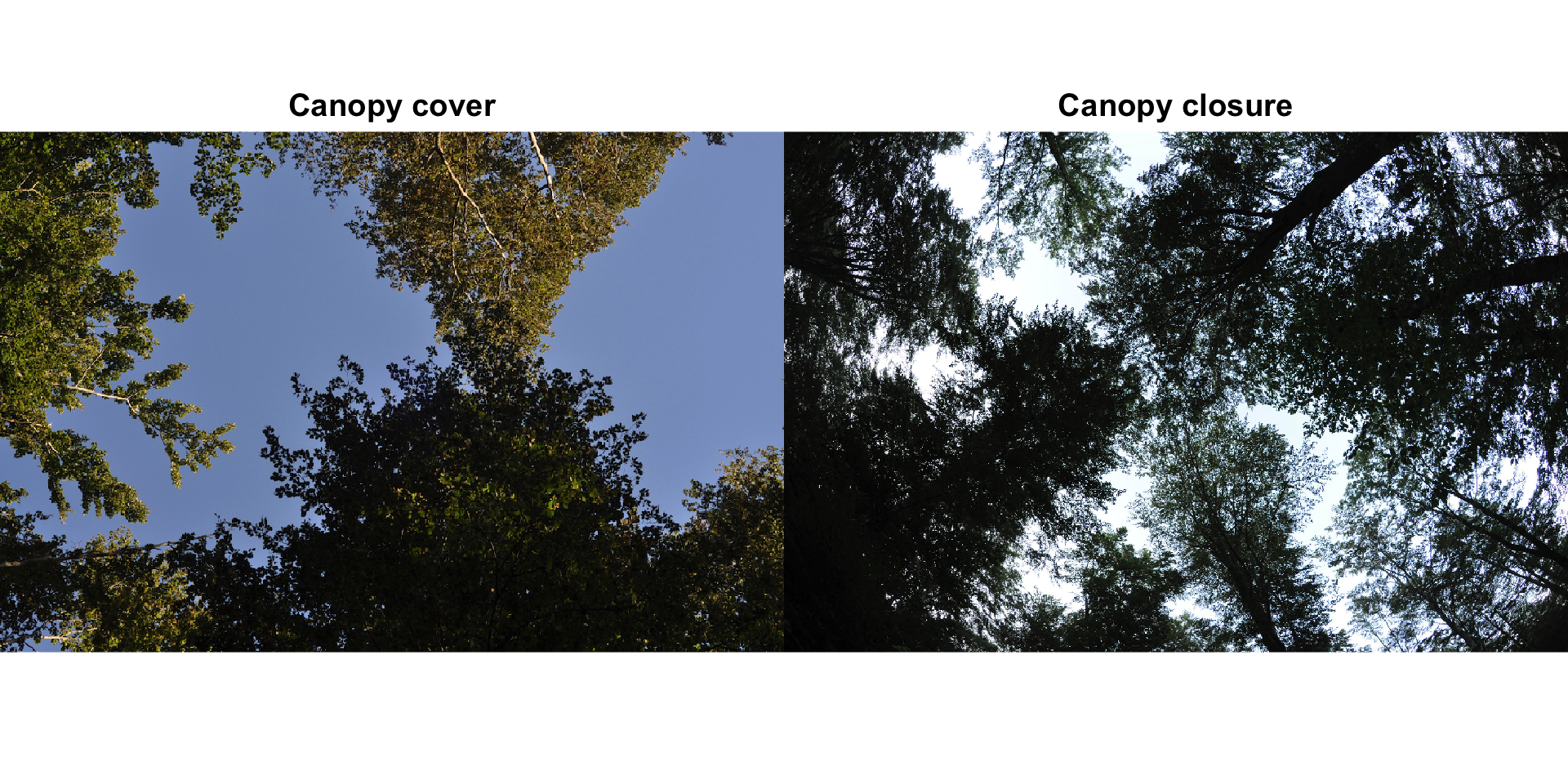
Canopy (foliage or crown) cover (CC): “the ratio of the forest floor covered by the vertical projection of crowns”
Canopy closure (CL): integrated measure of “amount of sky hemisphere covered by a vegetation when viewed from a single point”
Energy exchange
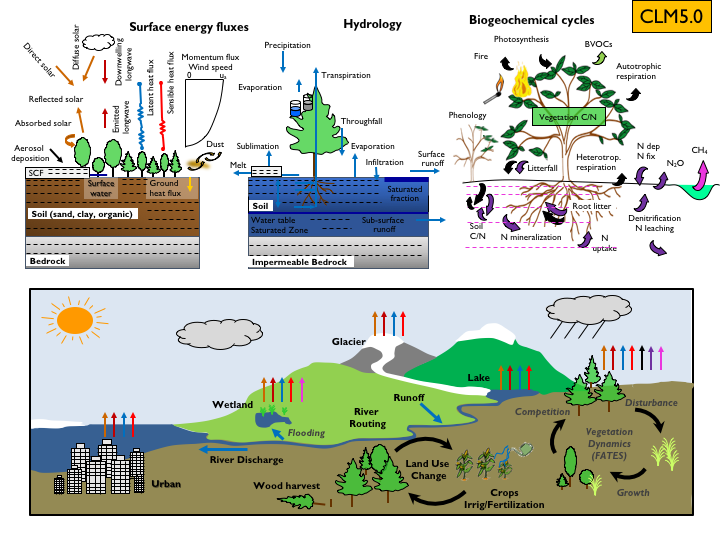
- Canopy is the interface between plant and atmosphere
Microclimate
- Canopy structure regulates microclimate in many ways

Radiation
- Canopy structure is influenced, and influences, the radiation regime
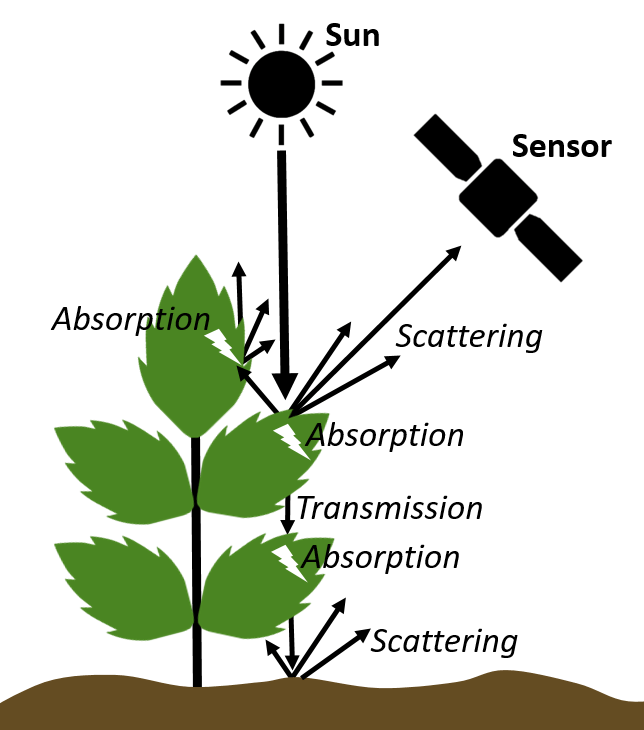
- All optical theory hinges on the response of vegetation to incident light (PAR)
- Incident light (\(I_0\)), light transmittance (\(\tau\)), light absorbance (\(\alpha\)) and reflection (\(\rho\))
Monitoring phenology

Monitoring phenology
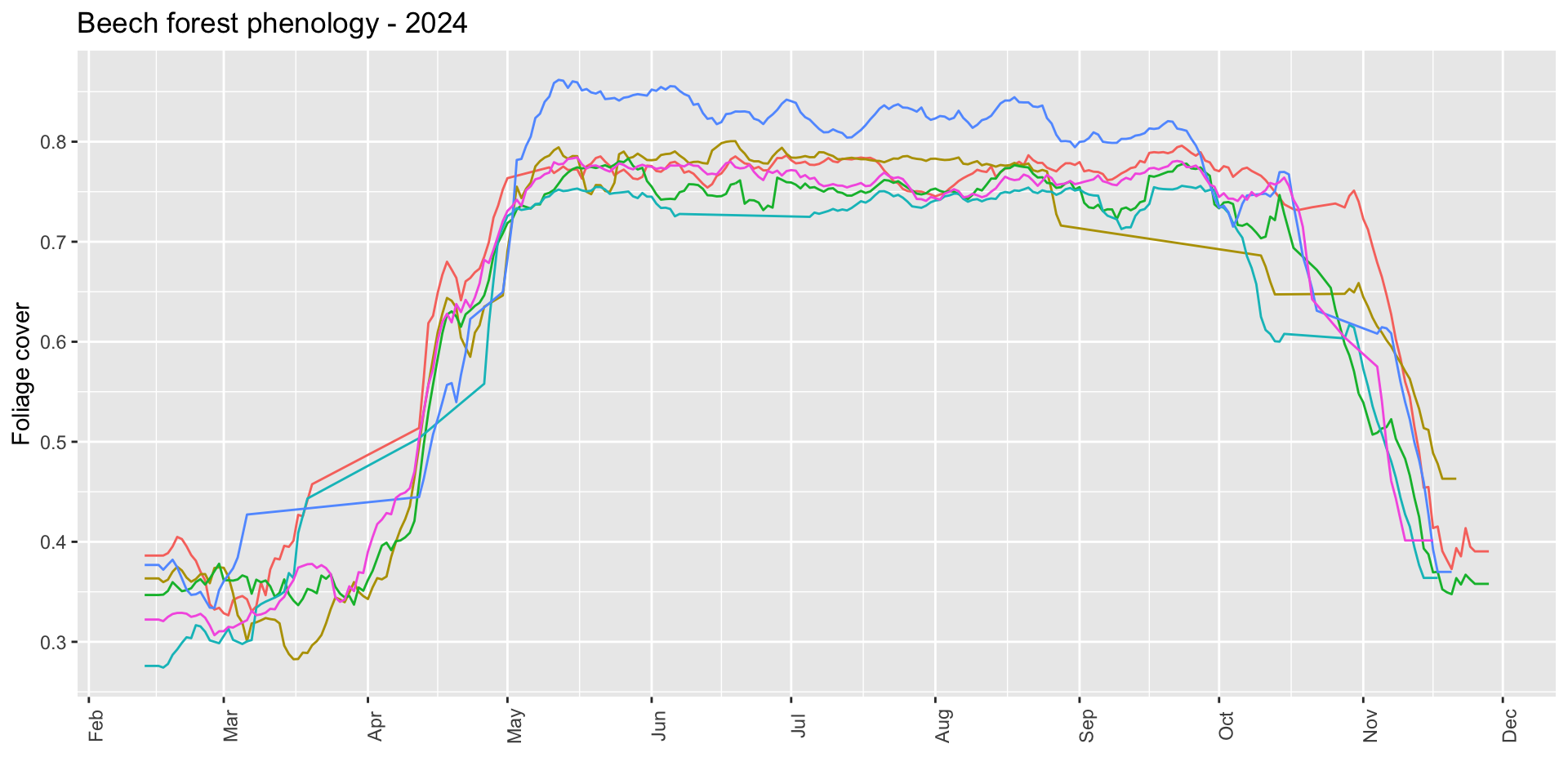
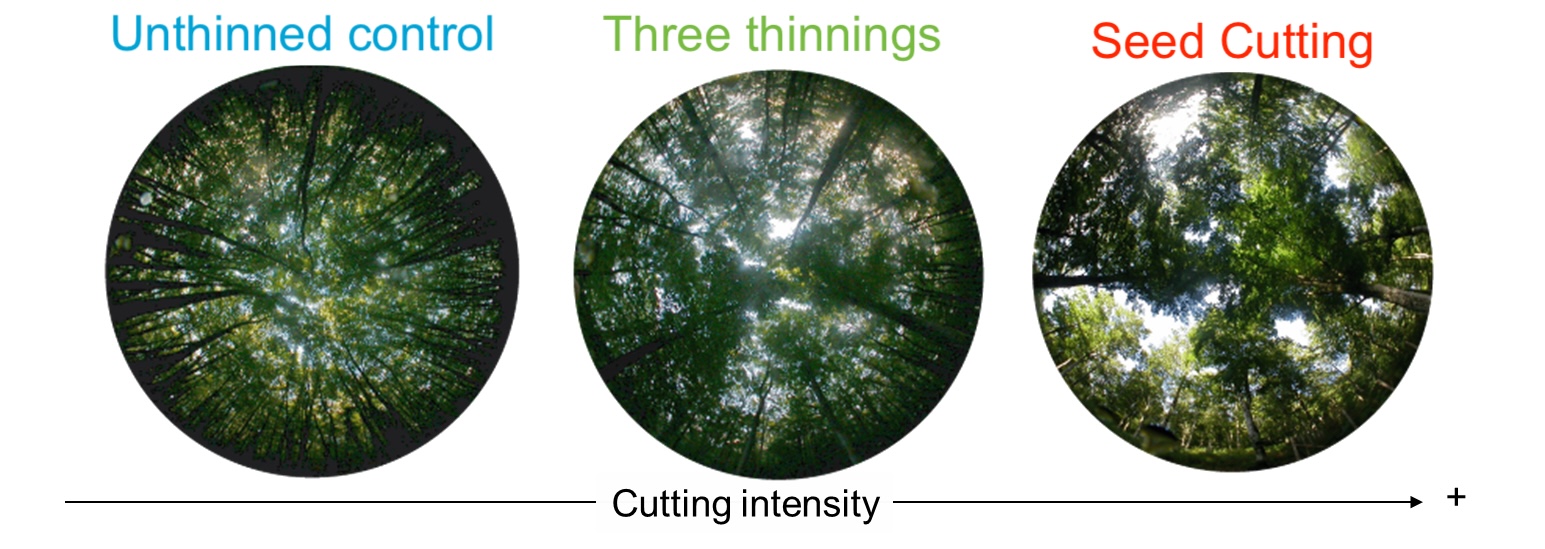
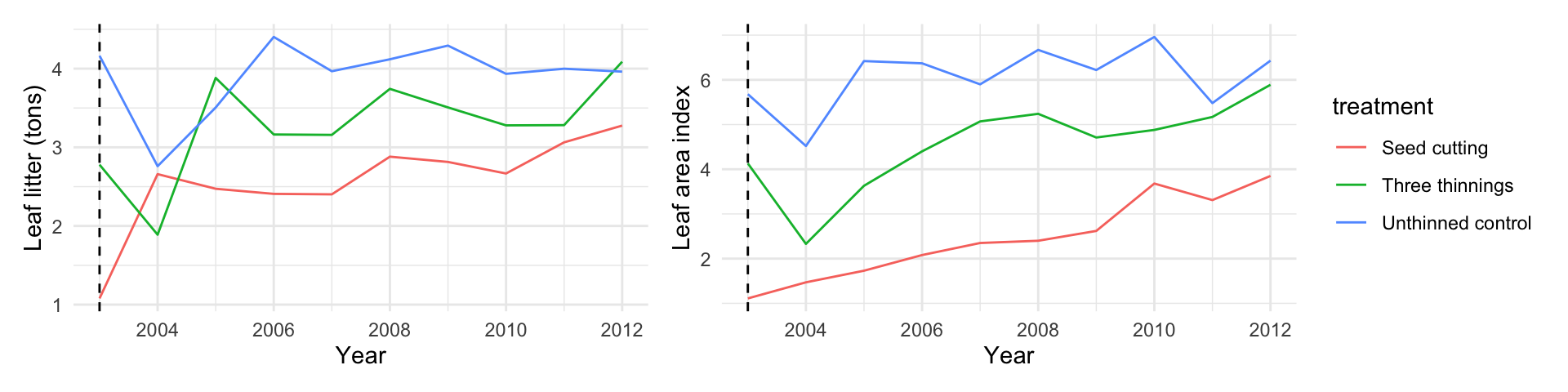
Monitoring forest management
- Forest management
Monitoring canopy recovery
- Post-storm recovery
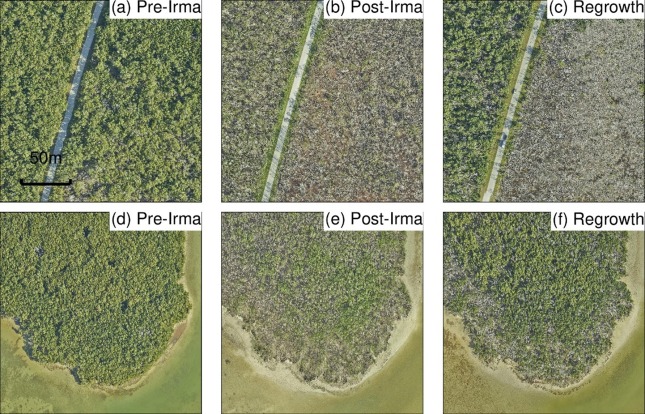
Monitoring canopy recovery
- Post-fire recovery
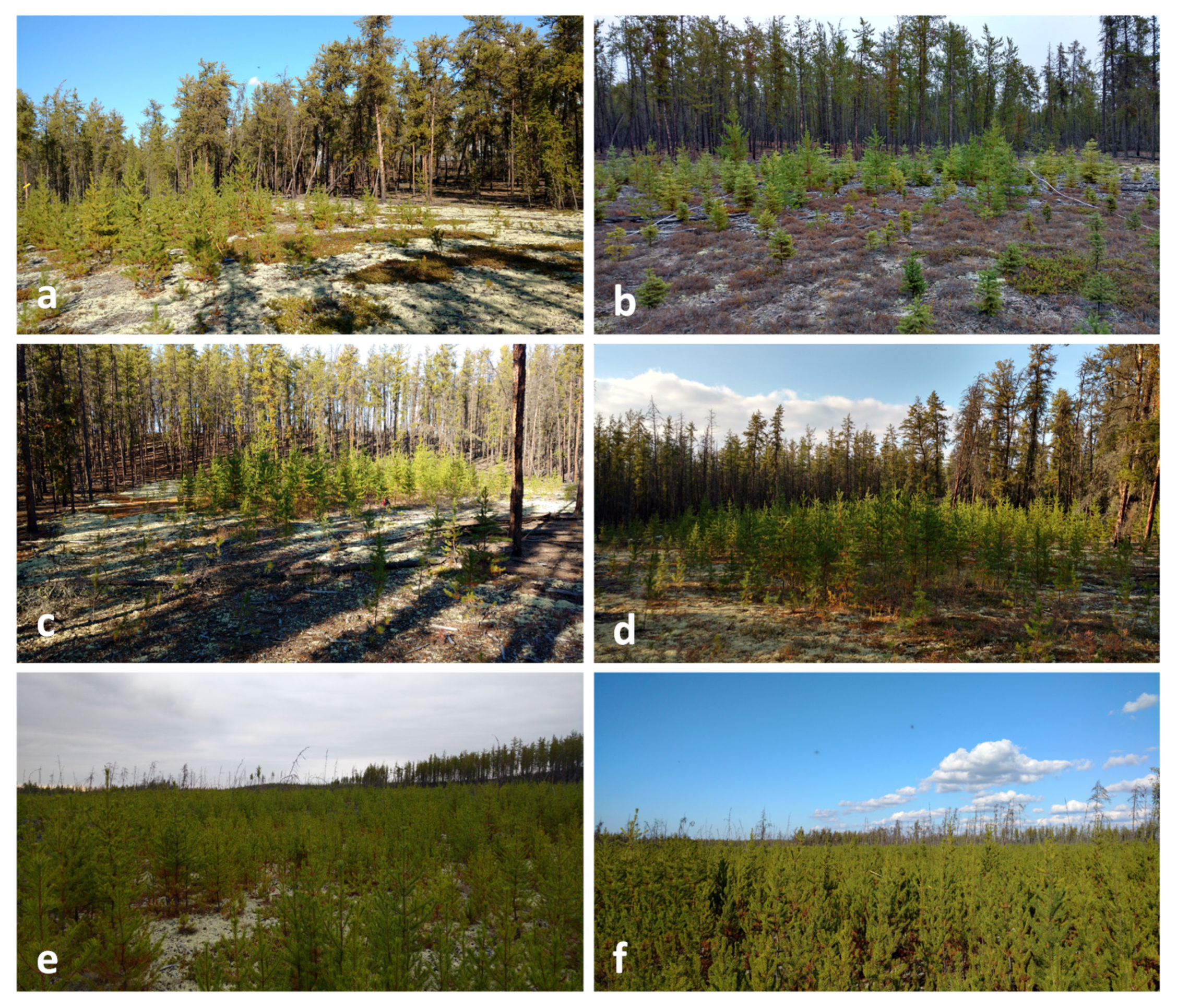
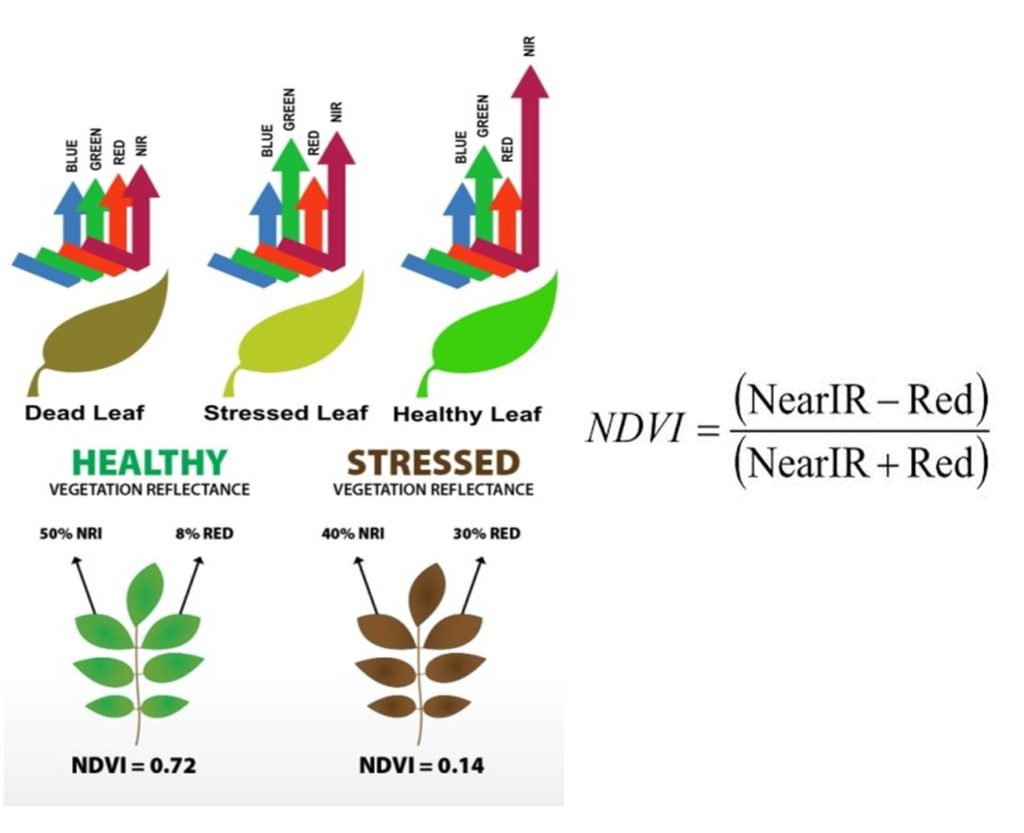
Earth Observation
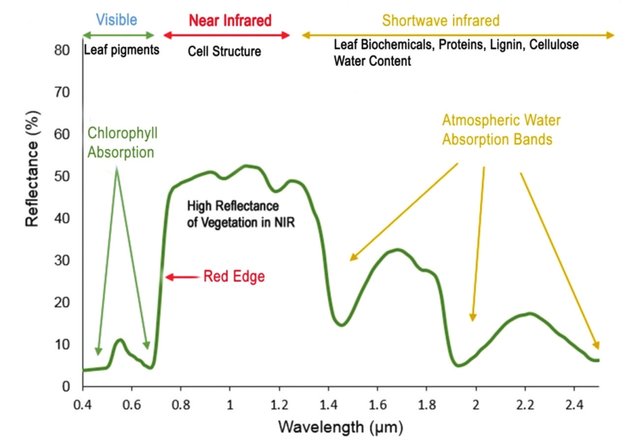
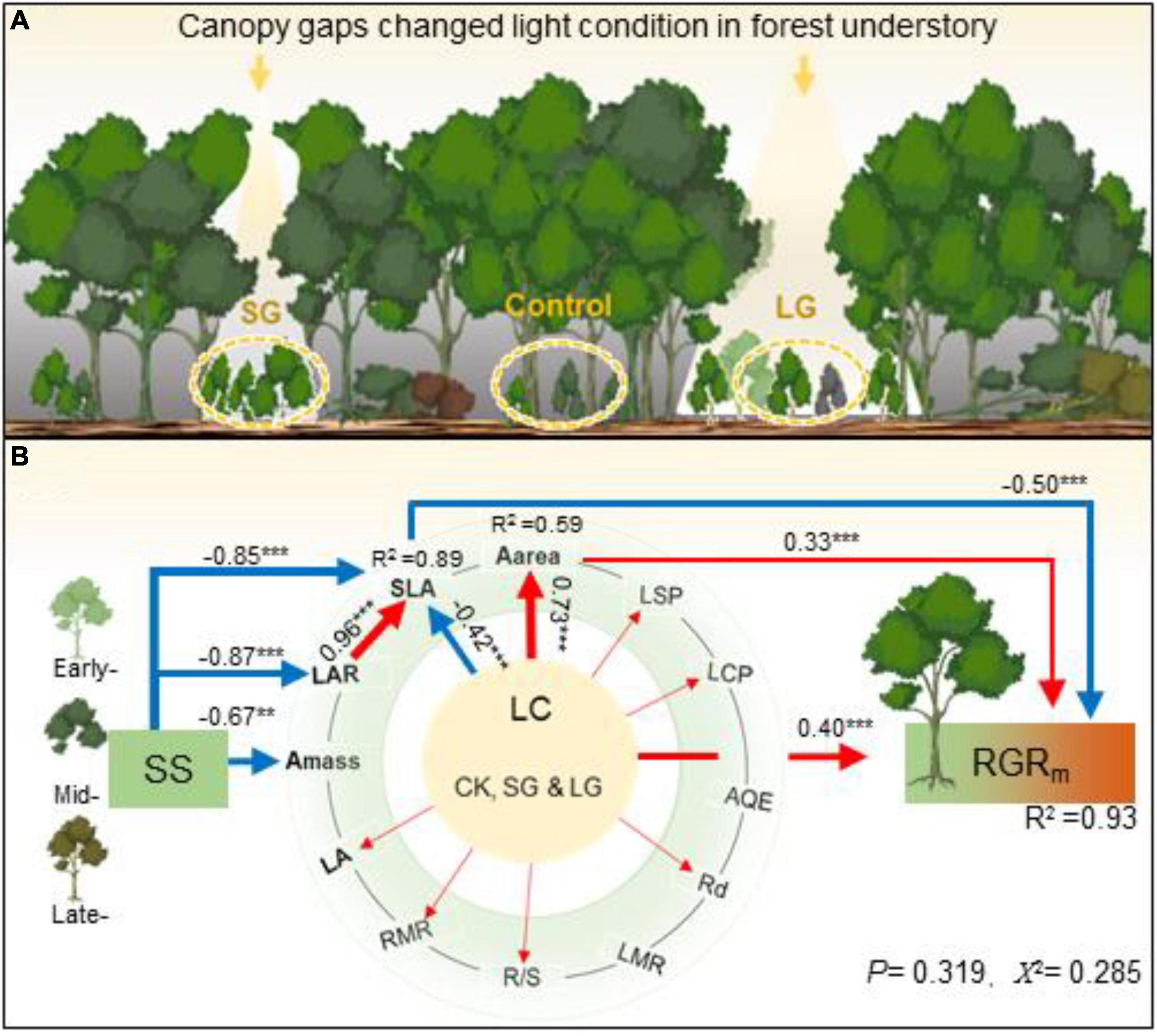
Plant biodiversity
- Relationship overstory - understory
Bat biodiversity
- Relationship canopy - bats

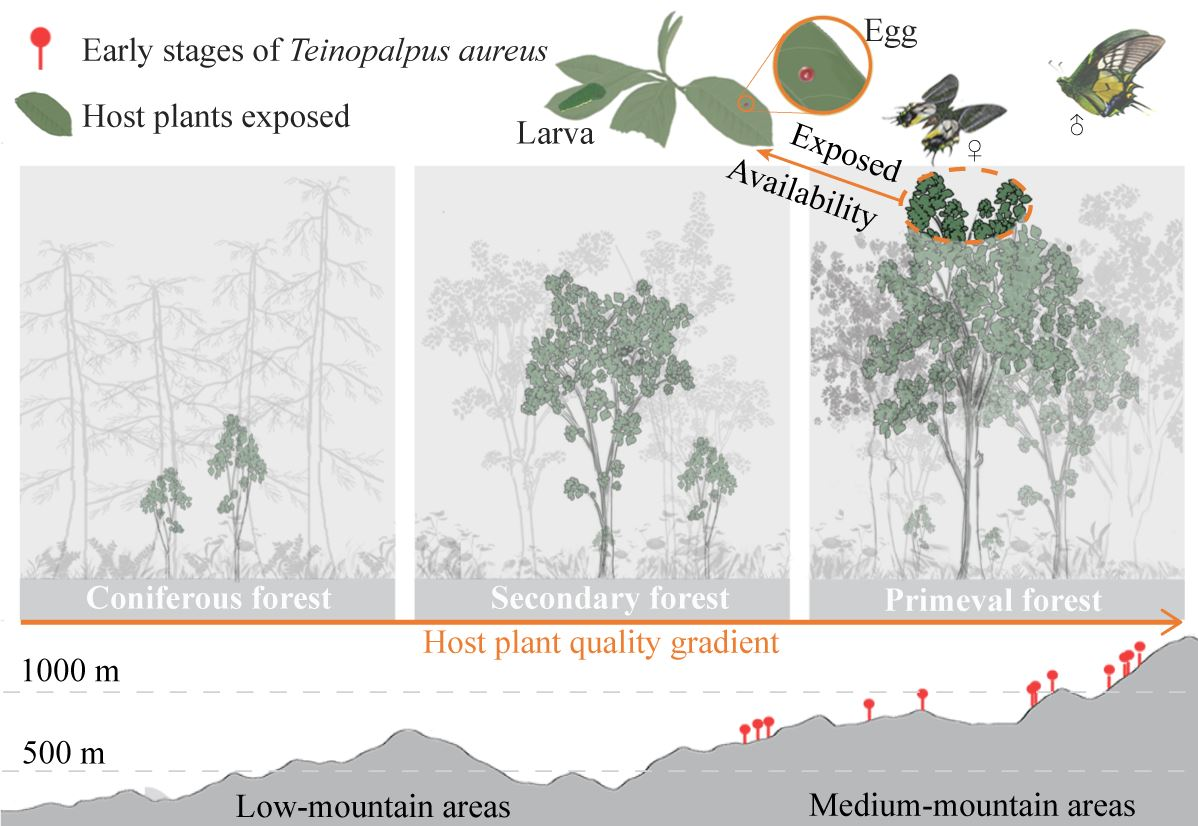
Butterfly biodiversity
- Relationship canopy - butterflies
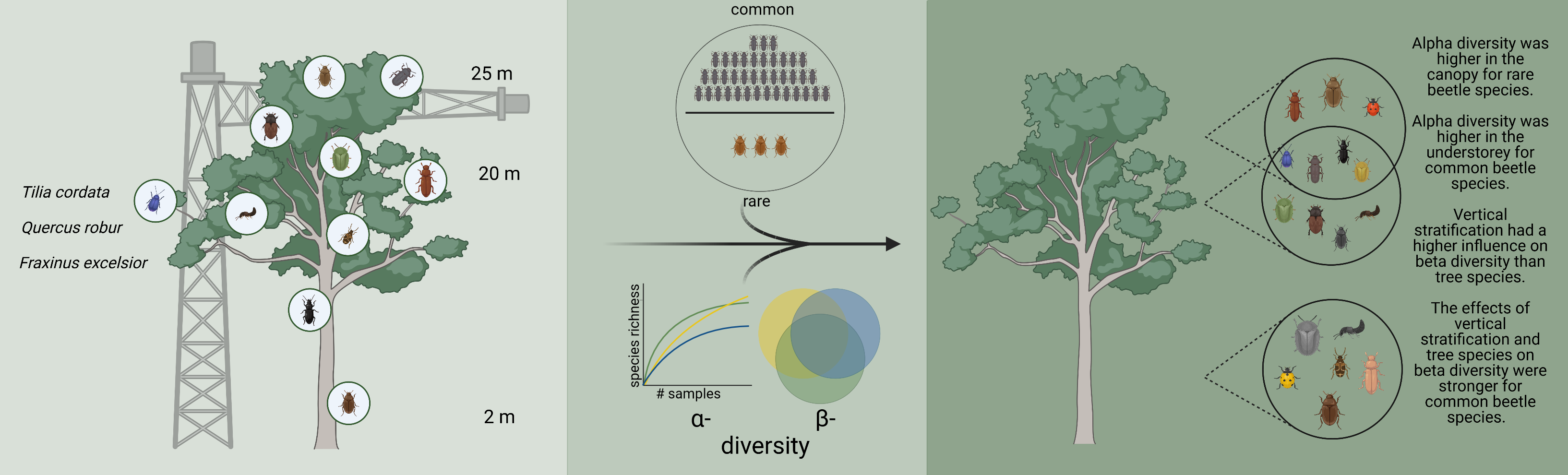
Beetles biodiversity
- Vertical canopy structure - beetles

LAI
We recall that LAI is basically influenced by:
1.  Leaf traits: shape, SLA, habit (evergreen/deciduous)
2.  Leaf orientation: random, clumped
3.  Leaf inclination angle distribution (G)
Optical measurements
- Optical methods infers LAI from radiation transmittance:
\[L=-\frac{log(P(\theta))cos\theta}{G(\theta)\Omega(\theta)}\]
- \(P(\theta)\) gap fraction
- \(G(\theta)\) foliage orientation
- \(\Omega(\theta)\) foliage clumping
It is known as Beer-Lambert law
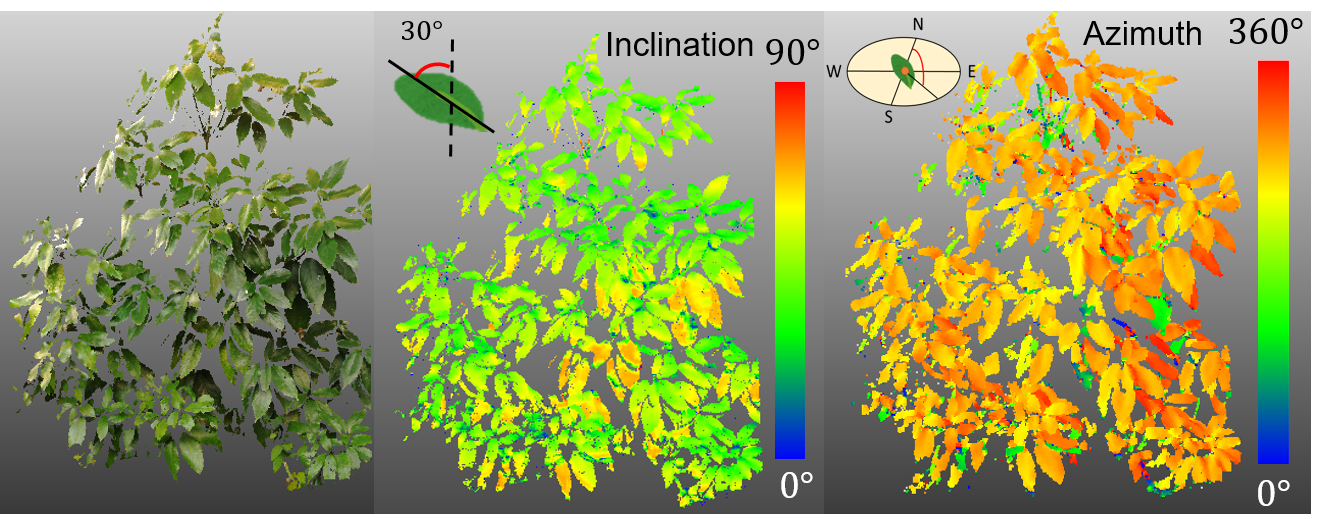
Ground optical methods
- Passive sensors (imagery):
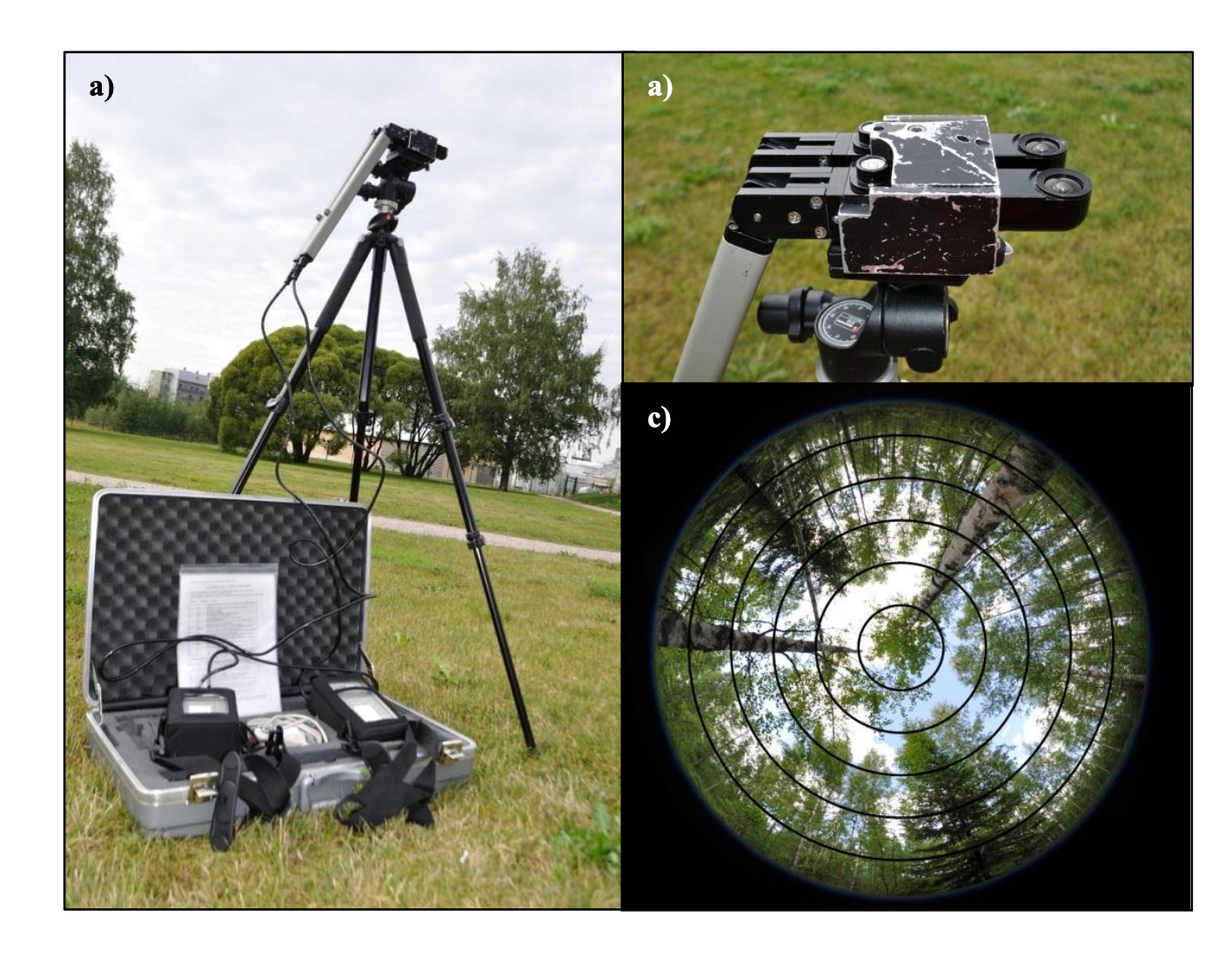
- Active sensors (LiDAR):
A cheap optical canopy method
Digital photography is widely used for field measurements of canopy:
Cheap and permanent record
Many open-software and tools for image analysis
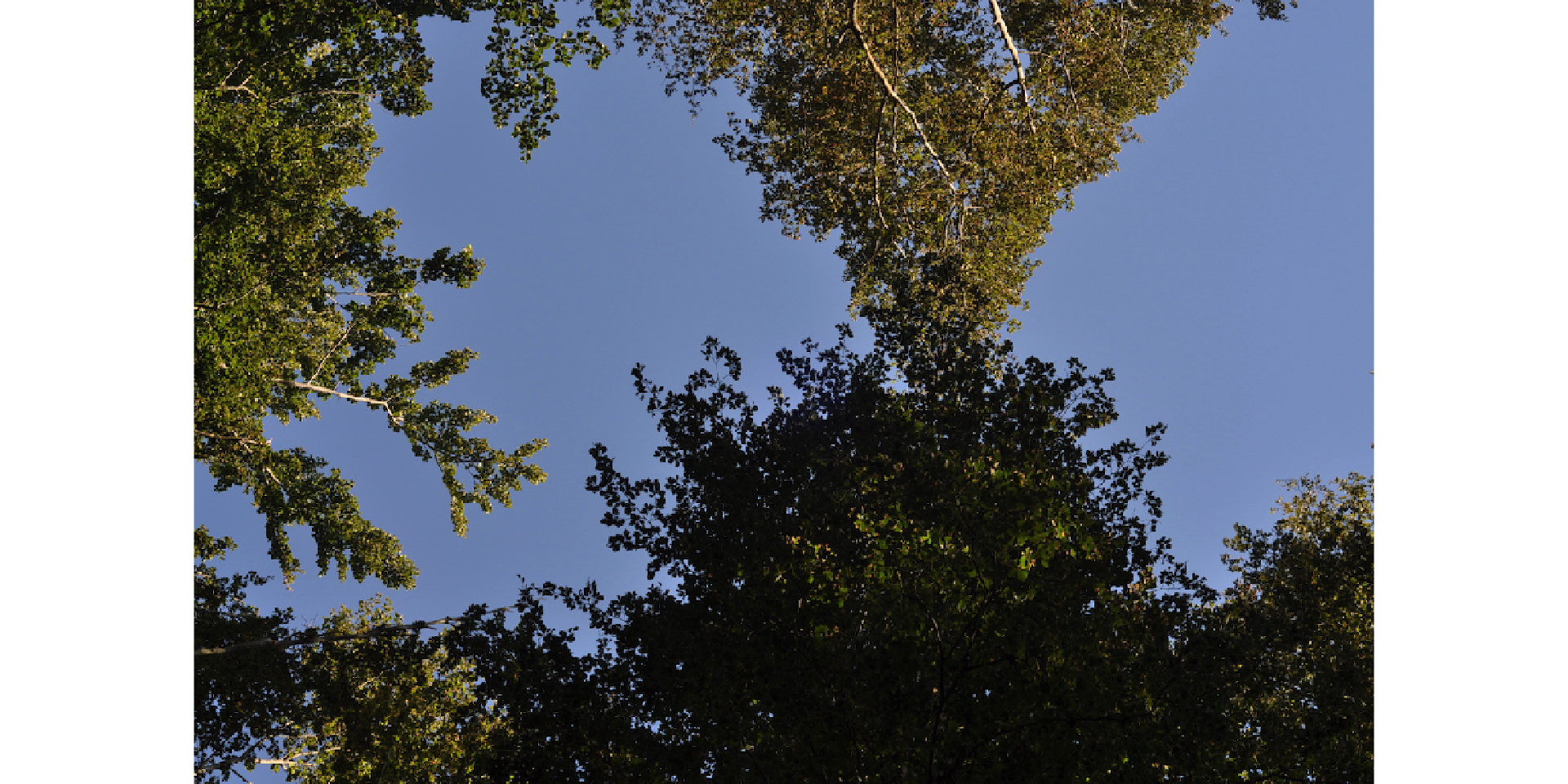
Multiple-view (fisheye) vs Single (vertical) photography
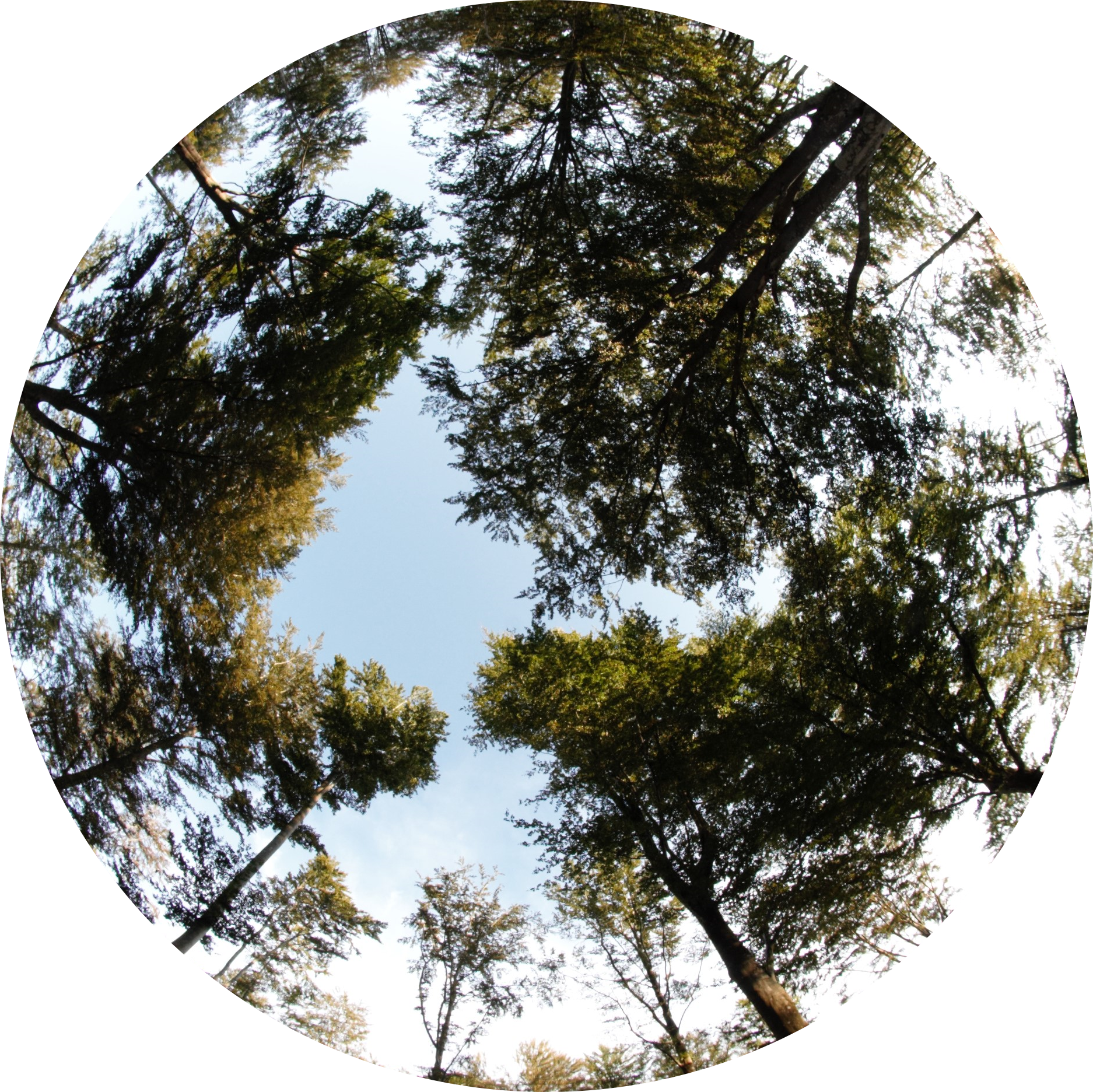
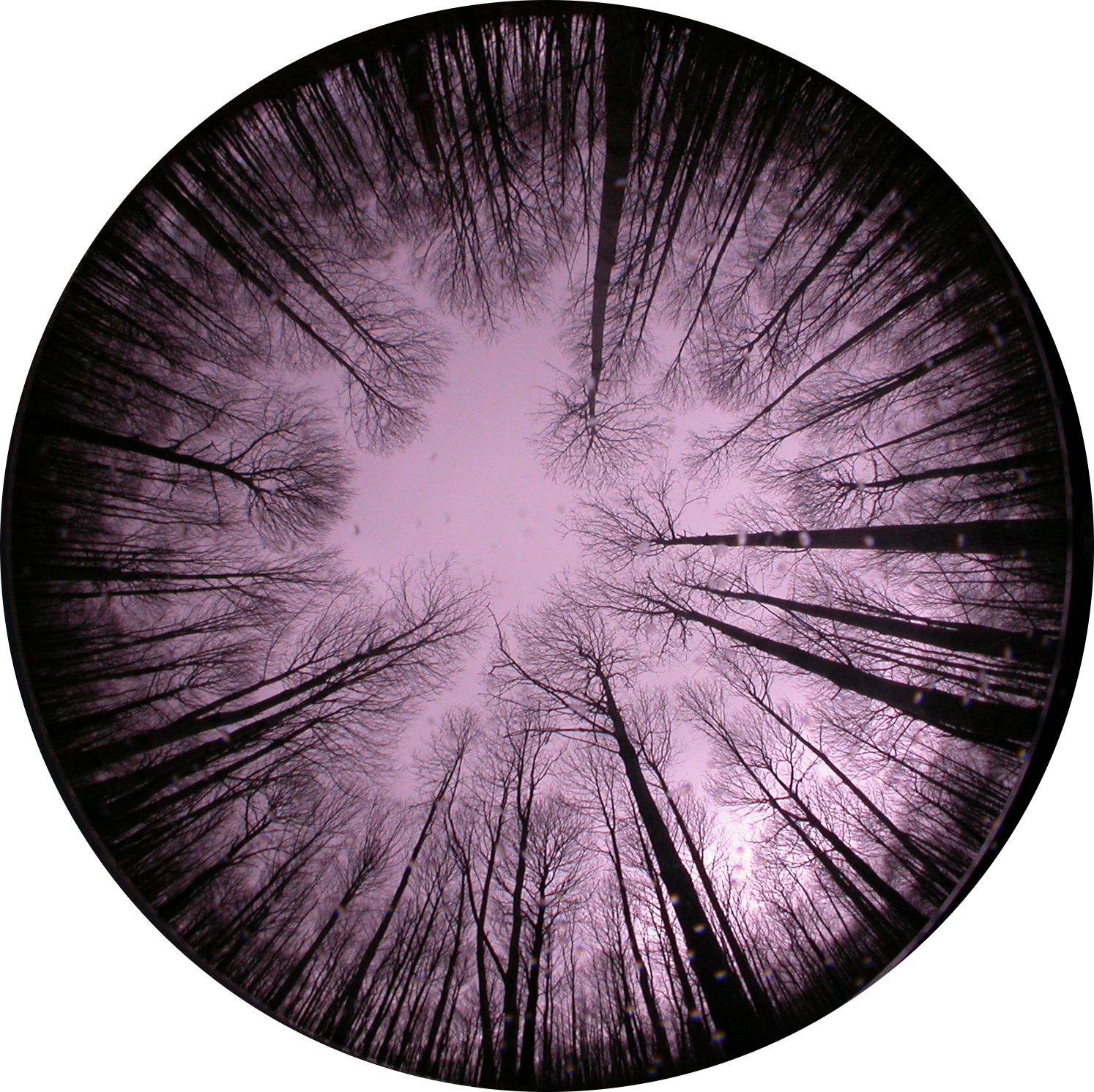
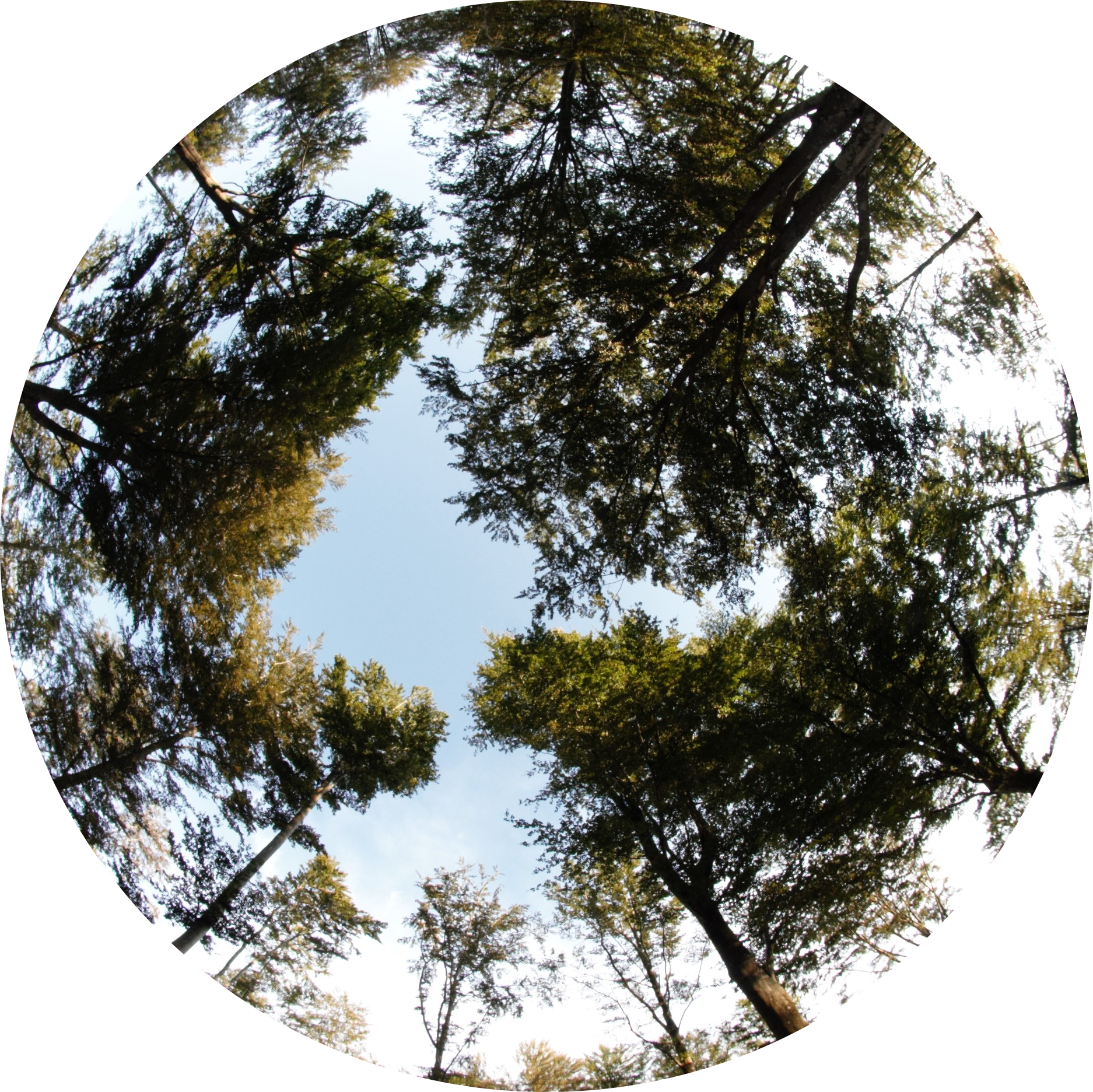
Fisheye photography
Pros: most information at the largest footprint
- Ecologically-relevant info (LAI, Light regime)
Cons:
specific equipment (lens)
sensitive to image acquisition (sky and exposure settings)
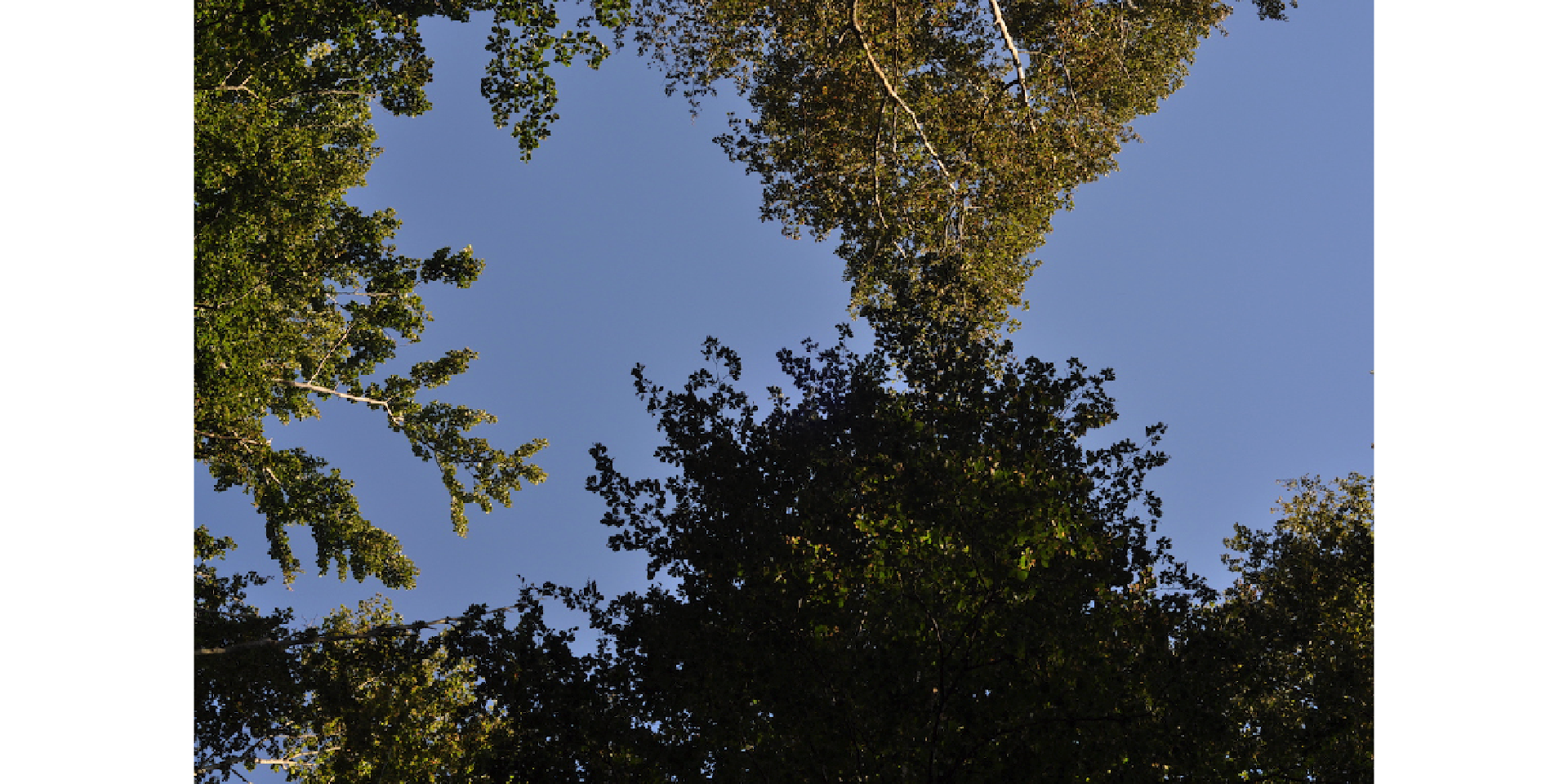
Cover photography
Pros: simplicity and flexibility
- Lower sensitivity to sky conditions and processing
- Forest inventory attribute (cover) and Remote sensing applications
Cons:
- Limited, mainly vertical sampling
- Require assumption for LAI
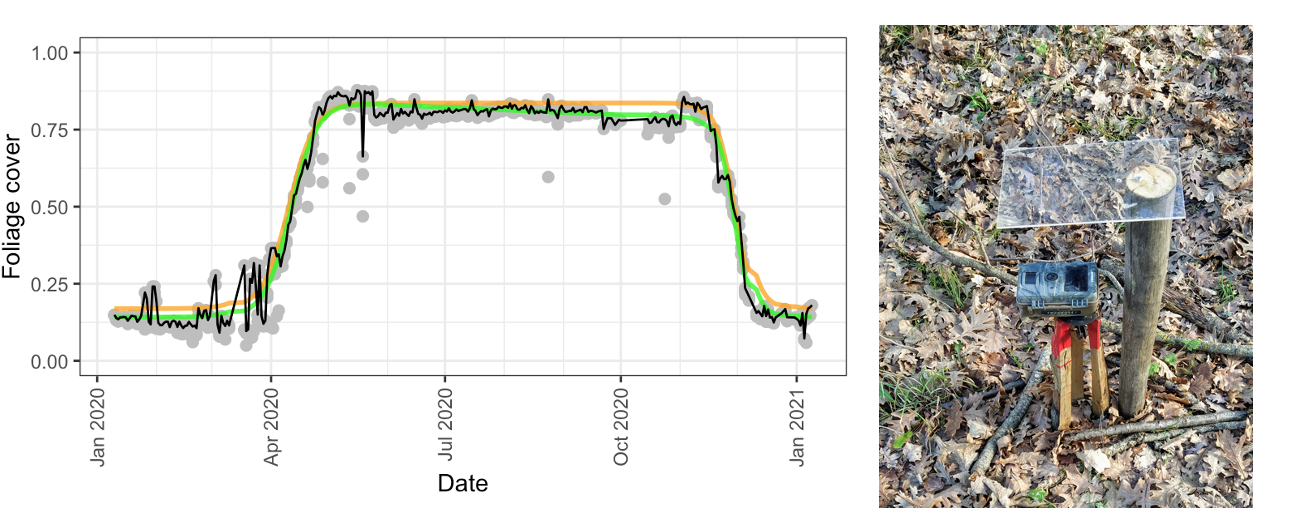
Canopy Photography monitoring
- Phenology monitoring
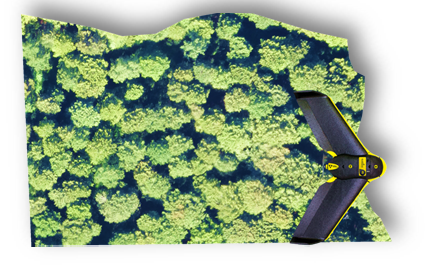
Canopy Photography monitoring
- Field and UAV monitoring:
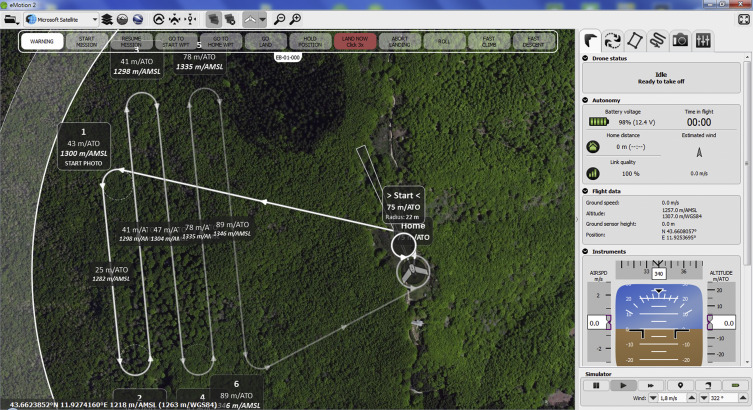
Canopy Photography and the city
- Urban forest monitoring
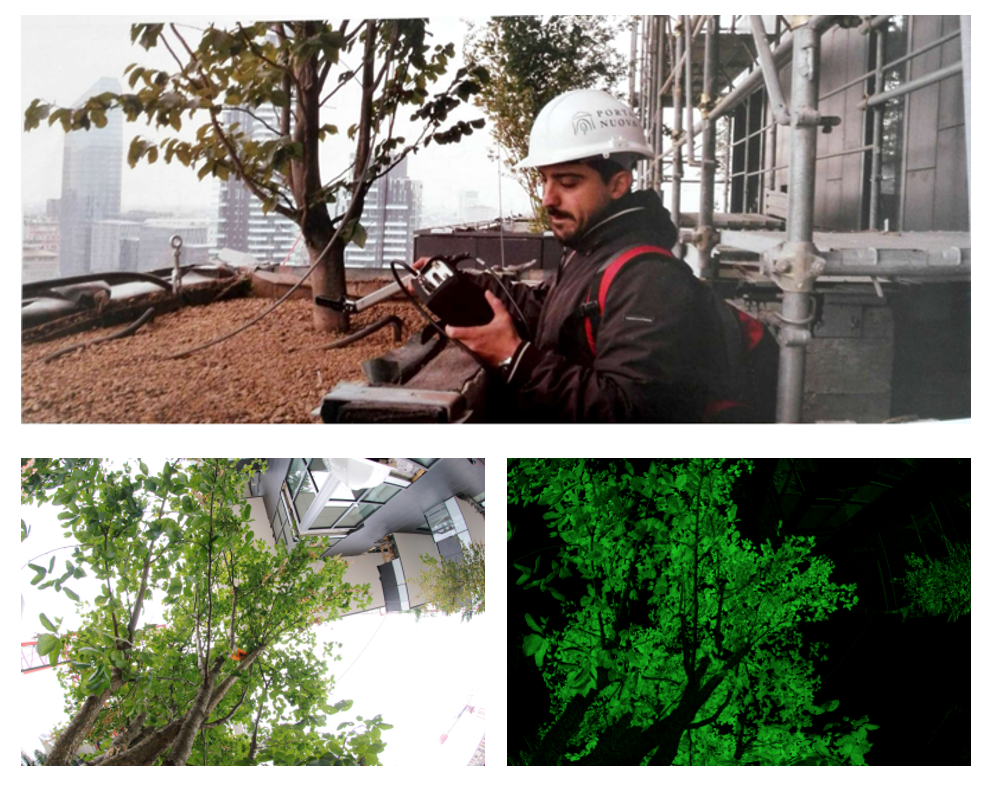
Canopy Photography and biodiversity
- Which method?
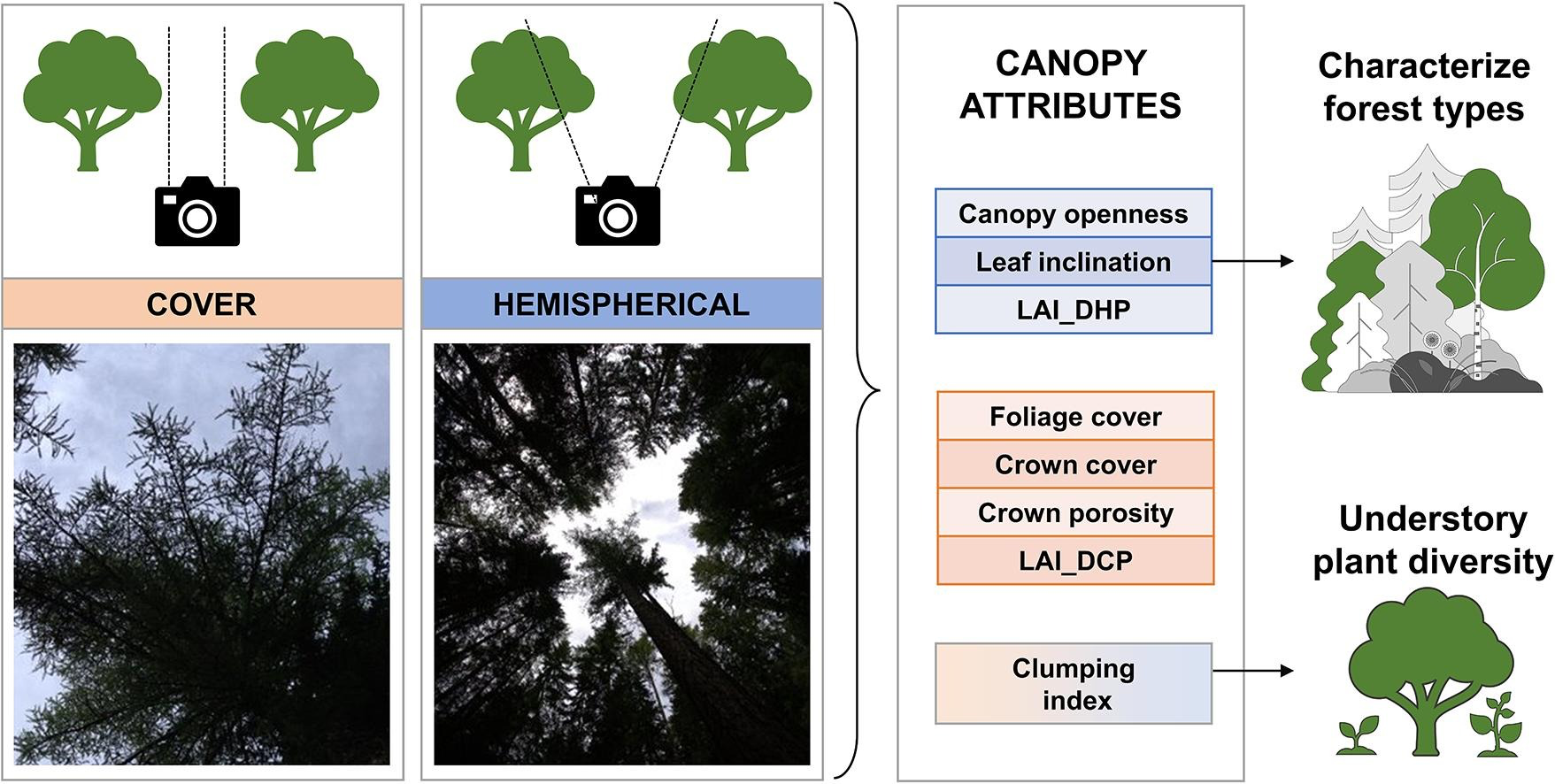
Canopy Photography and biodiversity
Hemispherical photography is better suited for ecology-biodiversity applications
- Largest footprint -> radiation regime, ‘sessile’ organisms
Canopy Photography and biodiversity
- Cover photography hold potential for continuous and phenology biodiversity monitoring
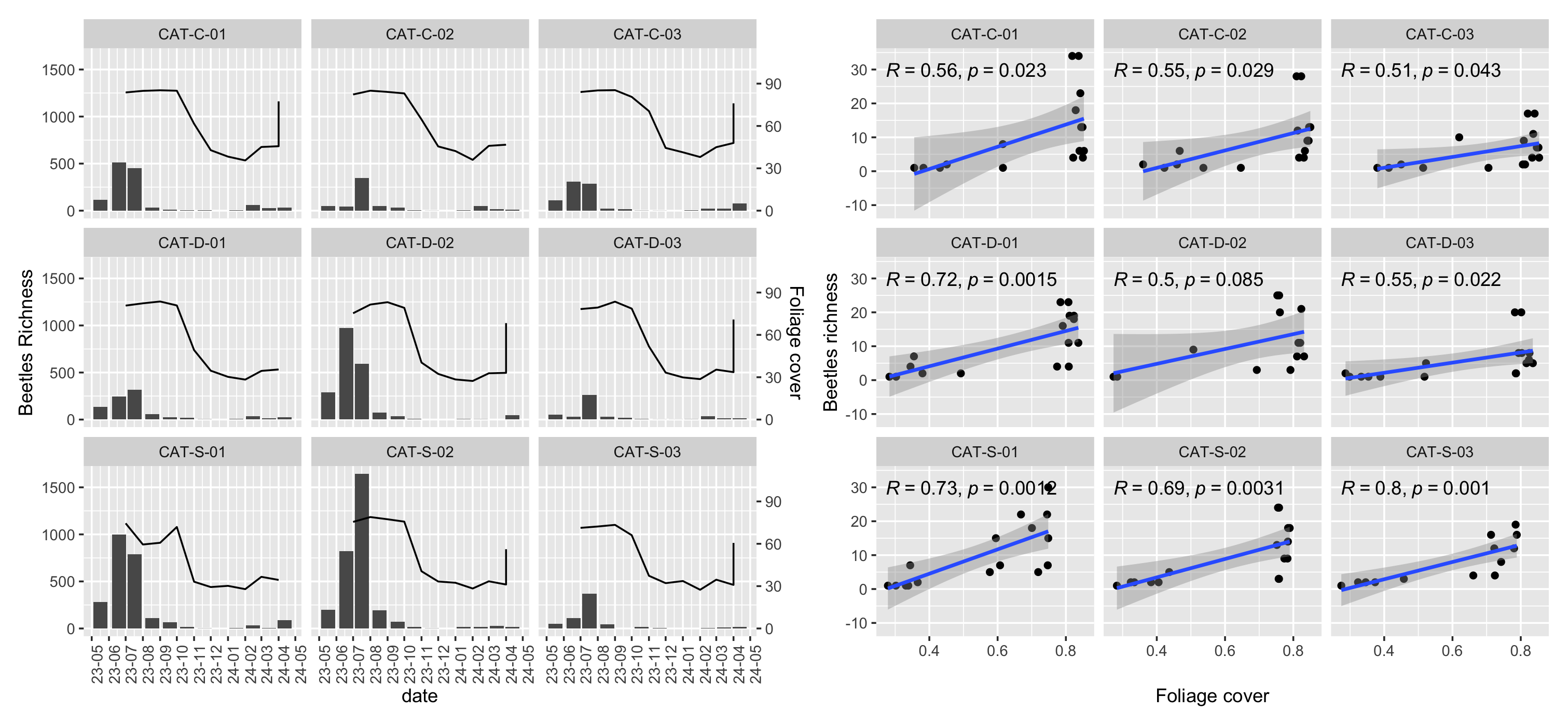
Data not published
Canopy R packages
- Package to use:


- See tutorial here