How to use photography to assess leaf traits
Due to the camera’s lens footprint, canopy photography is typically not suited for applications at scales smaller than trees. However, there are some examples in literature showing the use of digital photography to assess leaf-level traits. Examples include use of digital photography to assess leaf inclination angles (Ryu et al. 2010), individual leaf area (Leuschner et al. 2006) and leaf chlorophyll content (Baresel et al. 2017). Zadeh et al. (2012) used a digital camera approach as an effective method for urban tree monitoring of habitat quality.
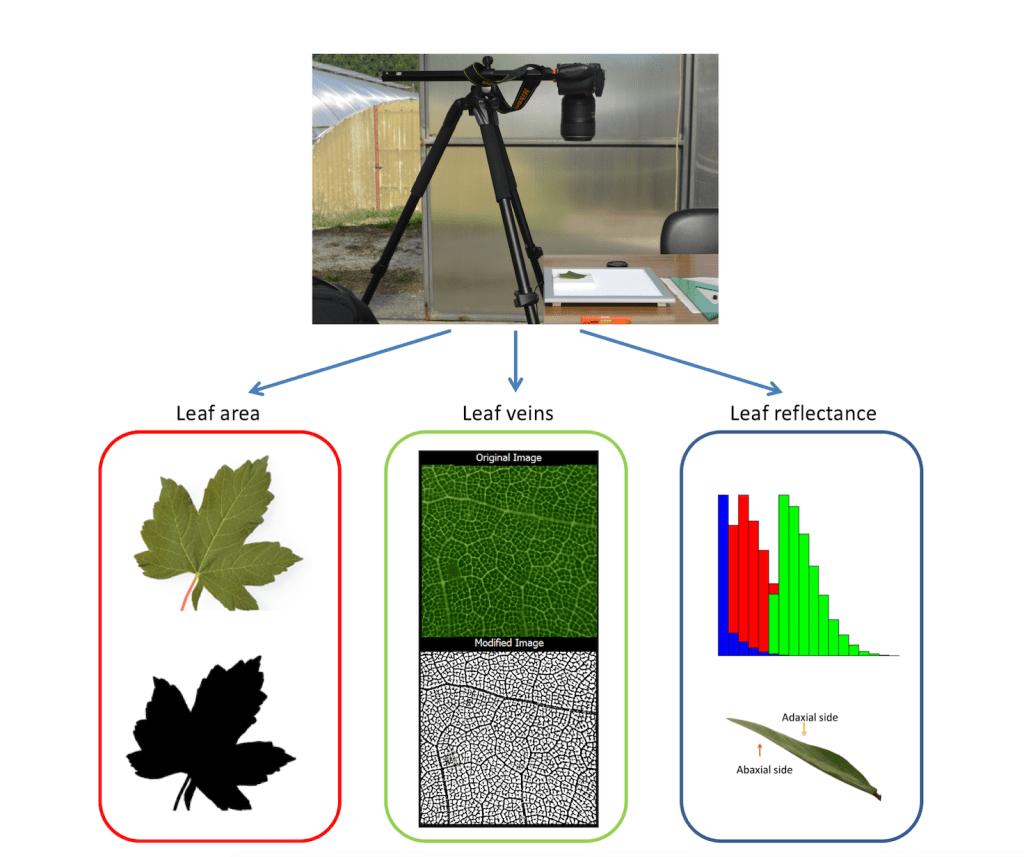
Following the above suggestions, I developed a study to assess three keys leaf-level traits: specific leaf area, leaf venation, and visible-light reflectance. These traits are important as they influence resource use and water balance of leaves, the light absorption, carbon sequestration, and pollutants removal capacity of plants.
Use of digital photography for retrieving these leaf-traits have the advantages of: i) obtaining different traits from a single image, supporting comparability of measurements and protocols used for gathering information; ii) reducing the cost of field acquisition and instruments, while potentially extending use of this technology also by non-experts; iii) allowing inspecting images and retrieving leaf traits directly in the field, without post-laboratory steps, which in turns may support timely quality check and field corrective acquisition strategies.
Chianucci, F., Ferrara, C., Pollastrini, M., Corona, P., 2019. Development of digital photographic approaches to assess leaf traits in broadleaf tree species. Ecological Indicators, 106, p.105547. https://doi.org/10.1016/j.ecolind.2019.105547