CrowNet is a collaborative canopy and tree phenology monitoring network based on continuous digital canopy images from remote camera traps.
The continuous camera system is based on acquiring daily images from upward-pointing camera traps using their time-lapse feature, and then inferring phenological transition stages from the annual series of canopy attributes derived from daily images (details on the methodology in Chianucci et al. 2021).
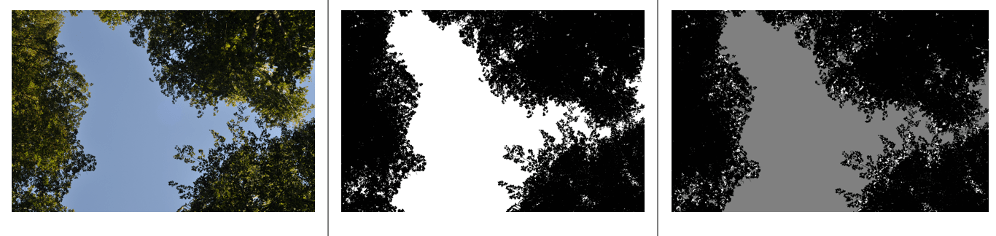
In December 2021, the first monitoring sites have been established by Reparto Carabinieri Biodiversità Pratovecchio, in the framework of a project aimed at monitoring tree canopy and phenology of the main diffuse mountain tree species and forests in State Reserves of Central Apennines, including the UNESCO primeval-forest heritage in Sasso Fratino Integral Reserve.
Thirteen camera traps have been installed by Reparto Carabinieri Biodiversità with the following objectives:
- Acquire information on how the trees species and forests responds to rapid climatic change;
- Testing the effectiveness of the camera monitoring system at larger spatial and temporal scales;
- Creating a first series of continuous data of canopy and phenology based on camera traps.
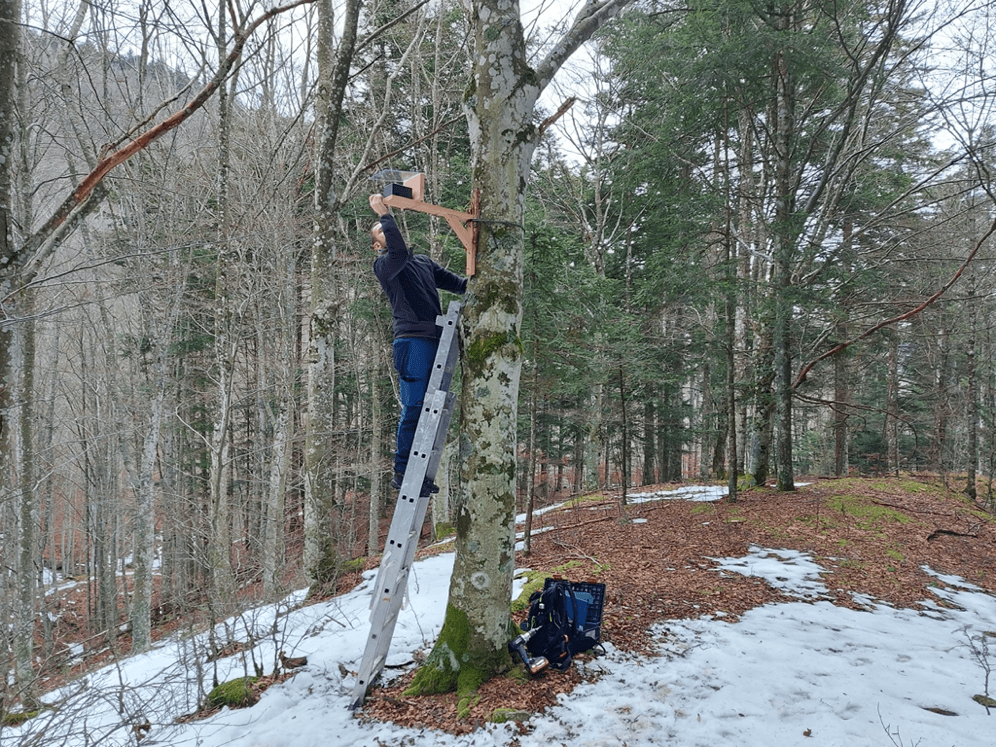
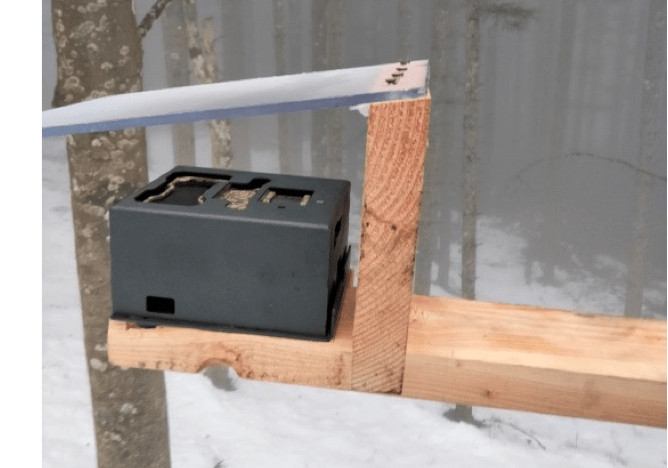
The first stage of the project foresees the continuous acquisition of daily images between December 2021 to December 2022. Estimates from camera traps will be validated with periodic optical measurements carried out in the field. The result of the first year will be a key point to test the effectiveness of the camera trap method and will be the first contribution to the collaborative CrowNet project.